
A scenario-based language learning app designed to help learners practice communication in situations they may actually face.
TRY PROTOTYPE ↗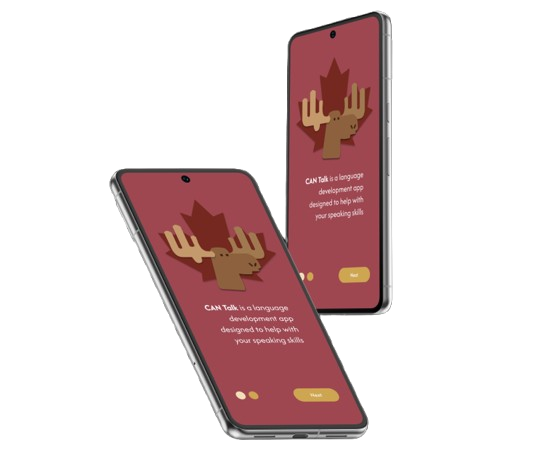
GBDA 210 — Introduction to UX Design
UX Designer & Prototyper
Vocabulary drills can help learners recognize words, but they do not always prepare them to speak confidently in real situations.
Make language practice feel closer to real life by organizing the app around situations, goals, and social interaction.
Rather than structuring the app around generic lesson categories, we centered the experience on recognizable situations. This gives each practice activity a clearer purpose and helps learners connect language skills with a real communication goal.
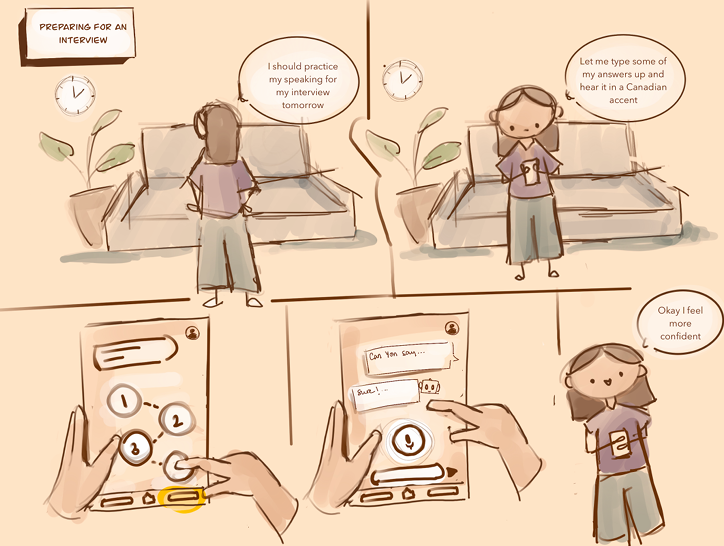
Practice language in a goal-oriented setting where tone, confidence, and response choice matter as much as vocabulary.
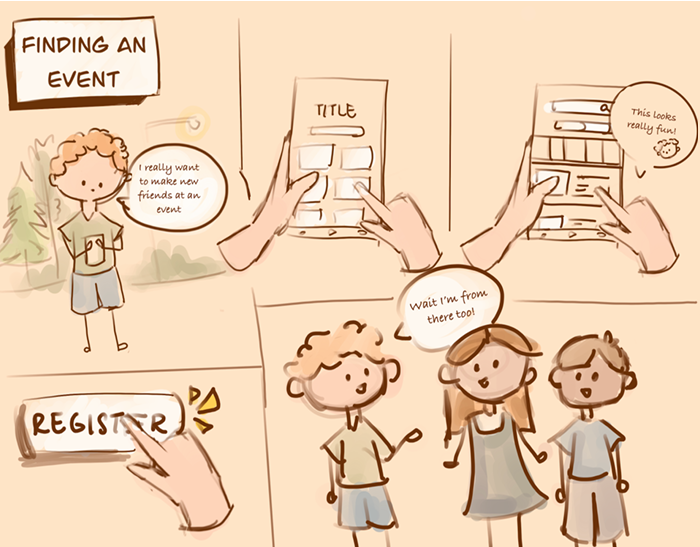
Extend learning beyond exercises by connecting language practice to social situations and community interaction.
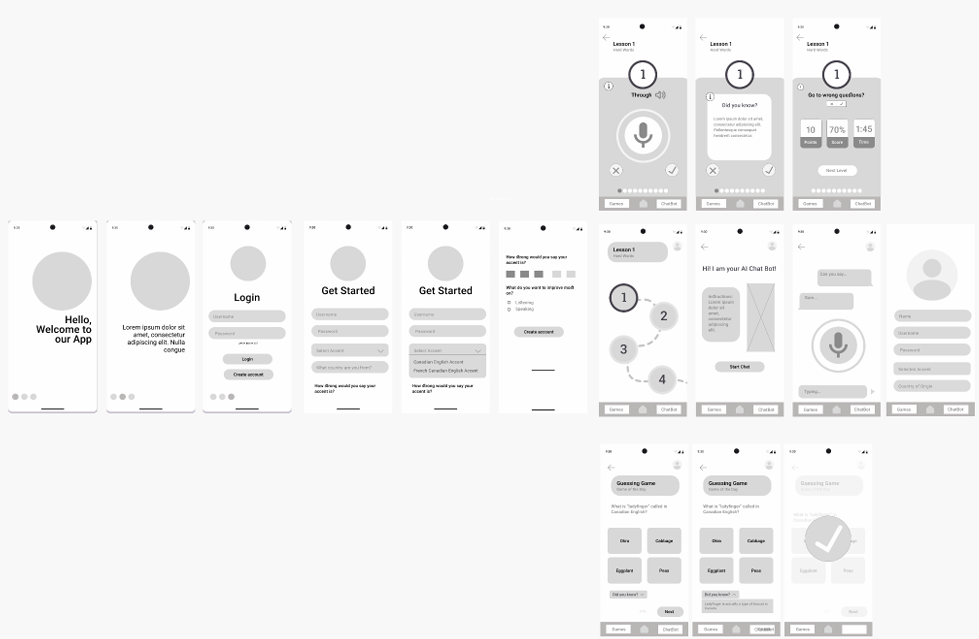
We used low-fidelity wireframes to work through the core navigation and content structure before committing to the final visual direction.
Scenarios make the learning goal more concrete. Instead of asking users to complete an abstract lesson, the interface gives them a recognizable reason to practice.
The project reinforced the value of resolving navigation and user flow problems at low fidelity before investing in polished screens.
We would test whether learners can move between scenarios, practice modes, and community features without feeling that the experience is fragmented.
CanTalk taught us how a single structural decision — organizing around real situations — can give an entire product a clearer experience.